
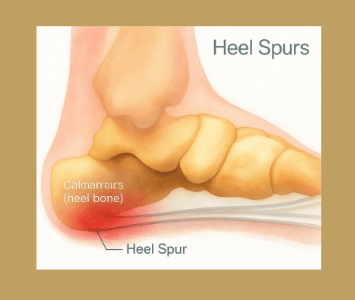
Heel spurs are a common foot issue that people can sometimes mistake for other conditions. A heel spur is a bony, calcium deposit growth on the underside of the heel bone (calcaneus) or at the back of the heel, often appearing as a hook or spike on X-rays. Caused by long-term strain on foot ligaments and muscles, and is frequently linked to plantar fasciitis. Heel spurs create pain, commonly described as a stabbing sensation. We’ve been seeing them present a bit in the clinic lately – but since they’re often mistaken for similar issues we thought lets dive into heel spurs.
Heel spurs form due to repetitive stress, chronic tension, and inflammation of the plantar fascia or Achilles tendon. Risk factors include improper footwear, running on hard surfaces, weight, and gait issues.
Many heel spurs are painless and discovered via X-ray, but symptomatic spurs can cause chronic or sharp pain, particularly in the morning. Mostly, they extend from the heel toward the arch (plantar fascia), but can occur at the back of the heel near the Achilles. So they often get confused with plantar fasciitis or Achillies tendonitis.
The primary difference is that plantar fasciitis is an inflammatory condition of soft tissue, while a heel spur is a physical bony growth. Heel spurs are often a secondary result of long-term plantar fasciitis. In many cases, the pain you feel is from the inflamed plantar fascia, even if an X-ray shows a spur is present. If the pain is sharpest during those first steps after waking and then “walks off,” it is almost always classic plantar fasciitis, regardless of whether a spur is present. It is very common to have both a heel spur and plantar fasciitis at the same time.
Some potential treatments for heel spurs that our Podiatrists in Thornbury may perform are:
Shockwave Therapy: This is one of the most effective non-invasive treatments for chronic heel pain. It uses high-energy sound waves to stimulate blood flow and kick-start the body’s natural healing process.
Custom Orthotics: Unlike store-bought inserts, custom orthotics are prescribed following a gait and biomechanical analysis.
Professional Strapping & Taping: A Podiatrist can apply special tape to provide immediate mechanical support to the arch, which helps determine if more permanent orthotics will be effective. If you are athletic or sporty, or have had a long lasting issue with heel spurs, our Sports Podiatrist Mitch is a great fit for your lifestyle.
Surgery is only ever a last resort for heel spurs after 6-12 months of alternative treatment methods.
Wondering if you have a heel spur or something else? Our Podiatrists in Thornbury are able to identify and treat heel spurs – make an appointment online or call 9480 4935 today!